Founder-built platform · two rendering systems
ArchWalkImmersive 3D & 360° Experience Platform
I built a published 360° experience product and a separate geometry-based architectural review workspace. They share product infrastructure, but solve different spatial problems and have different public release status.
Product surface 1
ArchWalk 360
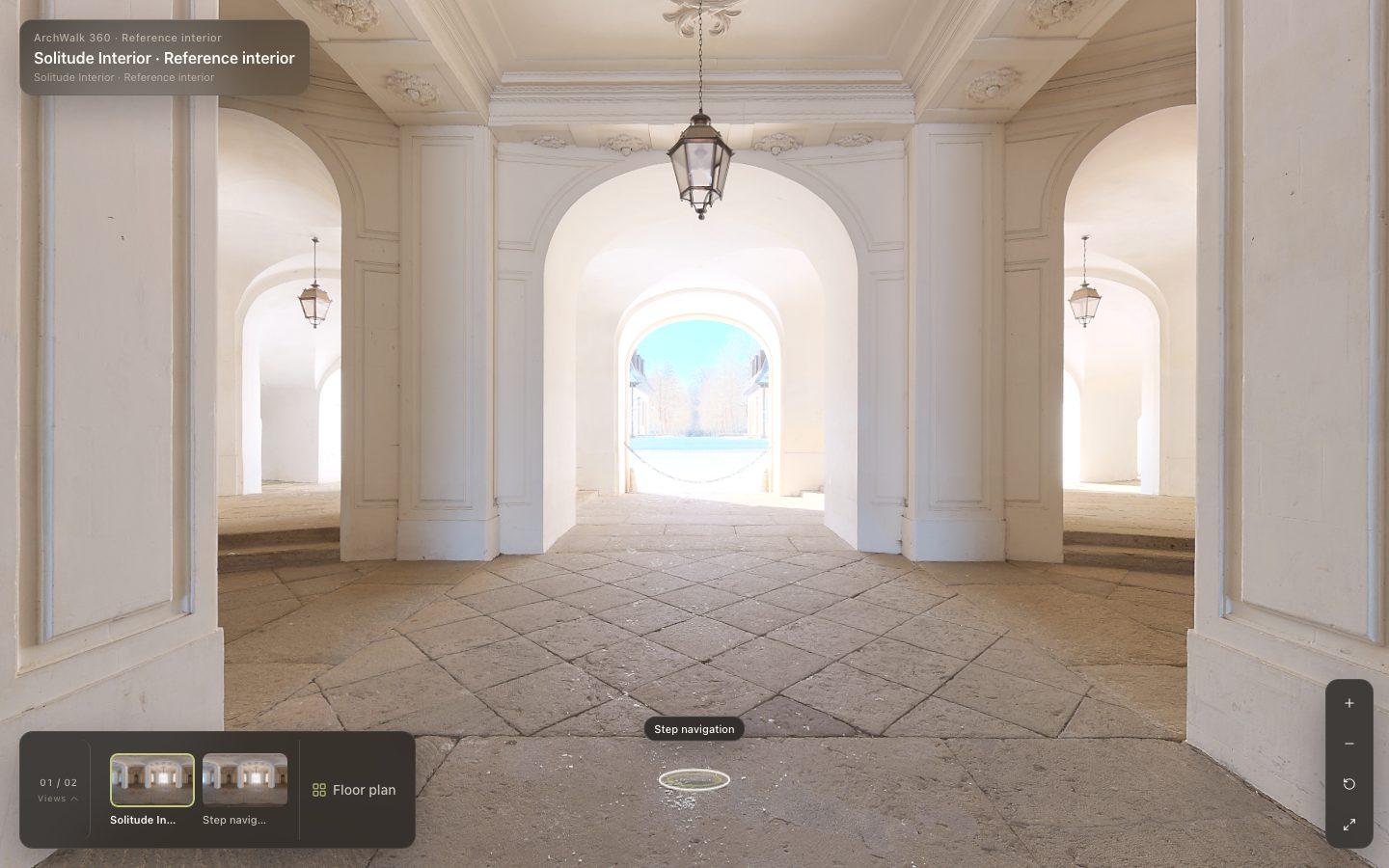
Actual Viewer UI with reference panorama photography. Scene markers and view controls belong to the running application; the depicted rooms are reference fixtures.
Andreas Mischok · Poly Haven · CC0 · Perspective rendered by the actual Viewer; screenshot encoded as JPEG.
01 / Snapshot
At a glance
- Built
- 360° Creator and Viewer; GLB-based architectural review
- Problem
- Turn spatial media and building models into navigable, reviewable experiences
- Ownership
- Founder & Lead Engineer across frontend, rendering, API, data, and media
- Delivery
- ArchWalk 360 public; Architects implementation present, public page Coming Soon
Product surface 2
ArchWalk for Architects
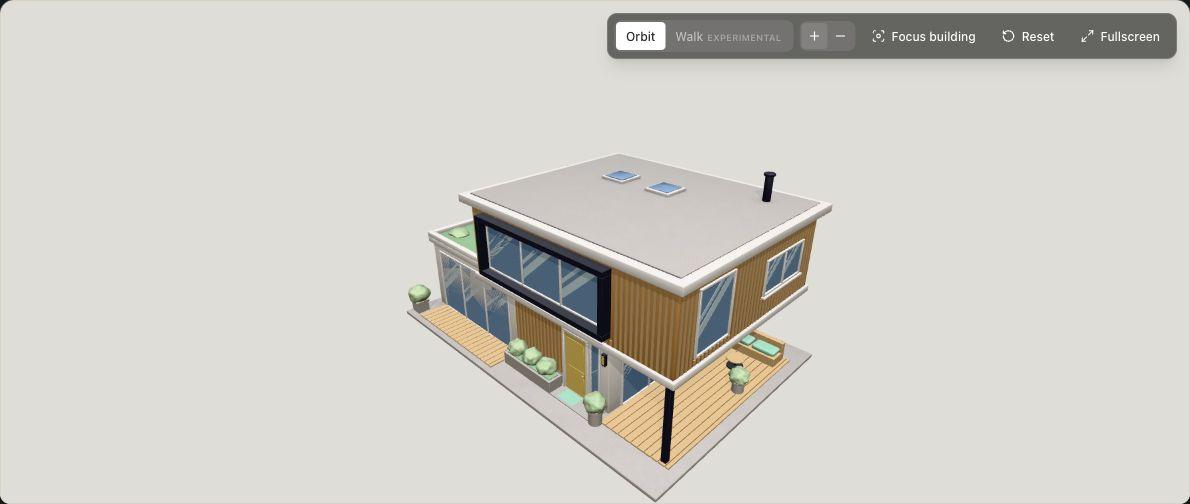
Actual ArchWalk 3D runtime rendering a CC0 Modern House GLB in Orbit review mode. This is a local reference capture, not a public product screenshot or a Walk session.
Modern House · Grab3D · CC0 · GLB loaded in the actual ArchWalk 3D runtime through an isolated local reference route; browser screenshot cropped to the component frame. No UI compositing or private model data.
02 / Context
The engineering problem
A panorama is a fixed capture. Visitors still need scene links, orientation, and a floor-plan reference to understand where they are. Authors need to edit those relationships without changing a published experience in place.
Architectural review has a different constraint: reviewers need to inspect actual geometry, navigate a 3D model, and attach feedback to spatial locations. A panorama viewer cannot supply arbitrary camera positions or mesh-aware comments.
03 / System
System architecture
Two paths through one product platform
The flows below show verified client, API, processing, storage, and presentation boundaries. They are logical paths, not a claim that every request traverses every node.
ArchWalk 360 · public
- 01CreatorDraft scenes, navigation, and media
- 02FastAPI servicesValidate edits and publish revisions
- 03PostgreSQL + R2Experience records and panorama objects
- 04Viewer + embedRead published snapshots
Architects · Coming Soon
- 01Review workspaceSketchUp-exported GLB upload
- 02Model API + R2Resumable transfer and source storage
- 03Background workerOptimize visual and collision GLBs
- 043D runtimeGLTFLoader, orbit/walk, spatial review
The 3D screenshot uses the real runtime with a public reference GLB in Orbit mode. Walk requires a processed collision asset and starting point; the public Architects page remains Coming Soon.
04 / Judgment
Engineering choices & trade-offs
Keep panorama and geometry runtimes distinct
- Problem
- A 360° photo and a GLB mesh have different camera and navigation models.
- Implementation
- The panorama renderer projects yaw/pitch markers onto a captured sphere; the 3D runtime loads meshes with GLTFLoader and offers Orbit and gated Walk controls.
- Implication / limit
- Photographic capture is efficient at authored viewpoints. Free geometry inspection adds model preparation, collision, and device rendering costs.
Code: panorama runtime; three-d-walkthrough-runtime.ts
Publish snapshots from editable drafts
- Problem
- Authors need to keep working without immediately changing a visitor's view.
- Implementation
- Creator edits a draft graph; publish validates it and records a revision that the read-only Viewer consumes.
- Implication / limit
- The public boundary stays stable while edits continue; publish and revision validation add lifecycle complexity.
Code: 360 publishing and Viewer services
Transfer media outside the request body
- Problem
- Panoramas and GLBs are large assets with different upload lifecycles.
- Implementation
- Managed uploads use presigned R2 transfers; the 3D path supports resumable multipart upload and server-side completion checks.
- Implication / limit
- Uploads can recover without restarting the whole file, while object ownership and cleanup must be validated explicitly.
Code: three-d-multipart-upload.ts; media services
Prepare visual and collision artifacts separately
- Problem
- A raw architectural GLB can be expensive to render and unsuitable for safe Walk navigation.
- Implementation
- The worker validates and optimizes GLBs using glTF Transform, Meshopt, and KTX2, and prepares a separate collision artifact. The runtime caps pixel ratio and disposes GPU resources.
- Implication / limit
- Orbit inspection can use the visual model; Walk remains gated until collision and entry-pose data are ready. Processing adds latency and failure states.
Code: three_d_models.py worker; 3D runtime
Separate embed access from authoring access
- Problem
- A public or partner-hosted Viewer must not inherit Creator permissions.
- Implementation
- Scoped Creator sessions, Partner API credentials, origin policy, and read-only published Viewer routes use separate access boundaries.
- Implication / limit
- Embedding becomes possible without exposing draft mutation, but each host boundary needs validation.
Code: embed policy, partner auth, Creator bridge
05 / Execution
Hard problems, concrete responses
Spatial state in two coordinate systems
Panorama markers track camera yaw/pitch; 3D review pins and viewpoints attach to geometry and camera pose.
Response. The implementations keep their own projection and navigation math instead of sharing a screen-pixel representation.
Browser budgets for architectural models
Large meshes and textures compete for memory and frame time across devices.
Response. The processing path compresses geometry and textures; the runtime uses a performance profile, bounded pixel ratio, and explicit disposal.
06 / Status
Delivery & outcome
ArchWalk 360
Creator and Viewer workflows, draft/publish revisions, spatial navigation, sharing, and embeddable delivery. The Hallwyl demonstration is independent reference content.
Architectural review system
GLB upload and preparation, real 3D rendering, camera modes, model review and spatial comments are present in the code. The reference still shows Orbit only.
Public Architects launch
The public product page says Coming Soon. This case study makes no launch, customer, checkout, or adoption claim.
07 / Proof
Real product evidence
The media below includes real application captures, a public reference demonstration, and source credits. Reference fixtures demonstrate implementation, not customer adoption.
Product captures
Actual interfaces, reference demonstrations, and their source details.
08 / Stack
Technology by responsibility
- Experience UI and rendering
- Next.js · React · TypeScript · Three.js · GLTFLoader
- Domain services and data
- FastAPI · PostgreSQL · SQLAlchemy · Alembic
- Media and model processing
- Cloudflare R2 · glTF Transform · Meshopt · KTX2